long moss
Definition
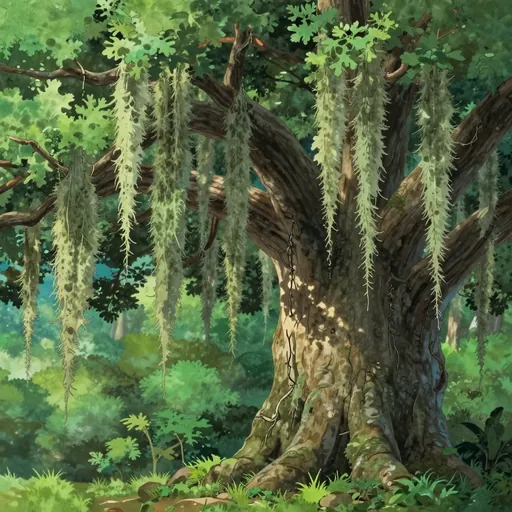
Noun 1. A type of epiphytic plant: "Long moss" refers to a specific, densely growing air plant. It forms large, hanging masses of slender, grey-green, hair-like strands. It is not a true moss but a flowering plant in the bromeliad family. It commonly grows anchored to the bark of trees in warm, humid regions.
Usage
- "Long moss" is a common name used primarily in the southeastern United States for the epiphyte . It is often seen draping from the branches of live oak and cypress trees.
- The term describes the plant's physical appearance—long, moss-like growths hanging in festoons.
Examples
- The ancient oak trees were draped with long moss, creating a mysterious, shaded canopy.
- Spanish moss, commonly called long moss in some areas, is a characteristic feature of the Southern landscape.
- She collected strands of long moss from the branches to use in a floral arrangement.
Advanced Usage
- Ecological Role: In advanced botanical or ecological contexts, "long moss" is noted as an epiphyte that provides habitat for small animals and insects but does not harm its host tree by parasitizing it.
- The long moss serves as a microhabitat for several species of insects and spiders.
Variants and Related Words
- Spanish moss: The most widely used common name for the same plant ().
- Old man's beard: Another common name describing its appearance.
- Epiphyte (n): A general term for a plant that grows on another plant for physical support but is not parasitic.
- Air plant (n): A common name for epiphytes, including species.
Synonyms
- Spanish moss
- Old man's beard
- (scientific name)
Notes on Meaning
- It is critical to understand that "long moss" is not a true moss (bryophyte). It is a flowering plant (angiosperm) in the pineapple family (Bromeliaceae).
- The name is regional; "Spanish moss" is a more universally recognized common name in English.
Noun
-
dense festoons of greenish-grey hairlike flexuous strands anchored to tree trunks and branches by sparse wiry roots; southeastern United States and West Indies to South America
Khám phá thêm
Các từ liên quan
Từ đồng nghĩa